
In modern precision machining, heat control is one of the most critical factors affecting tool life, surface finish, and dimensional accuracy. Among the many engineering solutions developed to address this issue, helical coolant hole rods have become an essential component in high-performance cutting tools and tooling systems. Their unique internal geometry allows coolant to flow more efficiently to the cutting edge, improving stability and machining consistency in demanding applications.
This article provides a complete overview of helical coolant hole rods, their structure, working principles, applications, and why they are widely used in advanced carbide tooling systems.
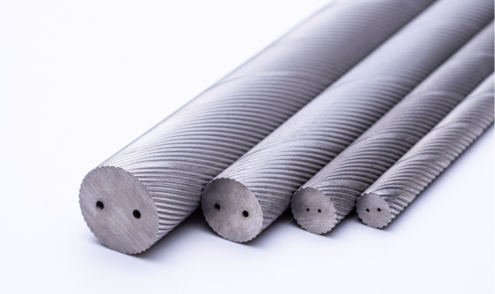
What Are Helical Coolant Hole Rods?
Helical coolant hole rods are specialized carbide or tool steel rods designed with internal spiral-shaped coolant channels. Unlike straight-drilled coolant holes, the helical design guides coolant in a controlled swirling motion from the tool holder to the cutting edge.
This spiral flow path improves:
- Heat dissipation at the cutting zone
- Chip evacuation efficiency
- Lubrication consistency
- Tool stability during high-speed machining
Because of these advantages, they are widely used in solid carbide drills, end mills, and high-precision cutting tools.
Structure and Design Characteristics
The performance of helical coolant hole rods depends heavily on their internal and external design.
1. Helical Internal Channels
The coolant holes are formed in a spiral configuration along the rod axis. This geometry ensures continuous and evenly distributed coolant flow.
2. High-Strength Material Base
Most rods are manufactured from ultra-fine grain carbide or alloy materials, ensuring high rigidity and wear resistance under extreme machining conditions.
3. Precision Ground Outer Surface
The external surface is ground to tight tolerances, ensuring compatibility with CNC grinding processes and final tool shaping.
4. Optimized Flow Dynamics
The helical structure reduces turbulence loss and improves coolant delivery efficiency compared to conventional straight-hole designs.
Working Principle in Machining Applications
During machining, cutting edges generate intense heat due to friction and deformation. Helical coolant hole rods address this issue through internal fluid dynamics:
- Coolant enters the tool shank
- It travels along spiral internal channels
- The helical path accelerates and stabilizes flow
- Coolant exits near the cutting edge under controlled pressure
This process ensures continuous cooling exactly where it is needed, reducing thermal distortion and improving tool life.
Key Applications in Precision Tooling
Helical coolant hole rods are widely used across multiple high-precision industries:
- Aerospace component machining
- Automotive engine part manufacturing
- Mold and die production
- Medical device machining
- High-speed CNC milling and drilling
They are especially valuable in deep-hole drilling and high-feed operations where heat accumulation is a major concern.
Benefits in High-Performance Machining
The adoption of helical coolant hole rods offers several engineering advantages:
Improved Tool Life
Consistent cooling reduces thermal wear and extends cutting tool lifespan.
Better Surface Finish
Stable temperature control minimizes material deformation and improves surface quality.
Higher Cutting Speeds
Efficient cooling allows machines to operate at higher speeds without compromising tool integrity.
Enhanced Chip Removal
The coolant flow helps flush chips away from the cutting zone, preventing clogging and re-cutting.
Role of Carbide Tool Manufacturers
Precision manufacturing of helical coolant hole rods requires advanced sintering, grinding, and quality control technologies. This is where experienced carbide tool manufacturers play a critical role.
Shanghai Lighthouse is a professional and experienced manufacturer and supplier of carbide cutting tools. With strong expertise in precision engineering and tooling system development, the company provides high-quality carbide solutions that support demanding machining applications, including advanced coolant hole rod production. Their focus on dimensional accuracy and material consistency makes their products suitable for industrial-grade CNC machining environments.
Common Questions (FAQ)
1. What is the main advantage of helical coolant hole rods?
The main advantage is improved coolant flow efficiency, which enhances cooling performance and chip evacuation compared to straight-hole designs.
2. Are helical coolant hole rods only used in carbide tools?
No. While they are most commonly used in carbide tooling, similar designs can also be applied in other high-performance cutting materials.
3. Why is coolant flow important in machining?
Coolant reduces heat, minimizes tool wear, and improves surface finish by maintaining stable cutting conditions.
4. Can helical coolant holes improve machining speed?
Yes. Better cooling allows higher cutting speeds while maintaining tool stability and accuracy.
Conclusion
Helical coolant hole rods represent an important advancement in precision machining technology. By optimizing internal coolant flow through a helical structure, they significantly improve tool performance, thermal stability, and machining efficiency. As industries continue to demand higher precision and productivity, these components remain a core element in modern tooling systems.